*New birds we’ve seen on our 2009 trip so far: wild turkeys, osprey, western meadowlark, mountain bluebird, sandhill cranes, Canadian geese, American white pelicans, trumpeter swans, killdeer, bald eagles, golden eagle, common merganser, great blue heron, raven, yellow-headed blackbird, Brewer’s blackbird, brown-headed cowbird, double-crested cormorant, Clark’s nutcracker, common goldeneye
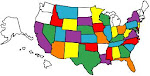
*National Parks/Monuments visited on 2009 trip so far: 17
*State Parks visited on 2009 trip so far: 2
[Remember that you can click on any picture to enlarge… then arrow back to the blog]
 With our next stop being only 62 miles to the south, we slept in and took our time before departing about 10am. Grand Teton National Park (www.nps.gov/grte/ ) is located just 8 miles from the south entrance of Yellowstone, and until we started planning this trip, we never realized how close the two parks were in proximity. Separating them is the John D. Rockefeller, Jr., Memorial Highway, parts of which are currently under construction causing up to 30 min. delays.
Our plan was to get to Colter Bay Campground around 1pm, set up camp, relax, and watch the All-Star baseball game that night. Unfortunately for only the second time during our travels we were unable to get satellite reception from either our automatic rooftop dish or the portable dish that we bring along. So after a couple hours of fruitlessly attempting to find reception, we were forced to give up. A fellow traveler a couple sites over noticed our efforts and let us know that they would be leaving the next day and reception did work from his site. Although not a fix for our TV enjoyment Tues. night, we made arrangements at the office to move the following morning. At that point we decided to trek about 7 miles down the road to Jackson Lake Lodge. There we enjoyed a few appetizers and beers as well as the All-Star game from St. Louis on the big screen.
As the game was winding down, we decided to step out on the back balcony to view the Tetons over Jackson Lake and watch the sun set. A number of people were there to do the same, and off to the left, perhaps a quarter mile down the road, we saw a large group of elk grazing. All of a sudden the herd formed two tightly bunched groups and hurriedly started to move in opposite directions. To our amazement a black grizzly bear was in hot pursuit of one of the groups. Although we had neither camera nor binoculars, we could see quite clearly as the bear attempted to take down some dinner. The bear turned and started to pursue the second group, and we watched for a few more minutes until the bear gave up and basically collapsed in the middle of the field. Bears can run up to 30 mph, but they are not known for their stamina.
It seemed like the excitement had ended so we had one more beer and started to head home. Instead of turning left, we decided to head down the hill towards where all the action had happened and to get a closer look at the elk. The short drive down the hill ended when we pulled over with a group of other travelers. Standing by the car, not 100 feet, strode another grizzly, this one brown in color. A number of rangers were at this intersection directing traffic and keeping the stupid people in check. We watched the activities until the light faded and headed back towards our campground.
It was now pretty dark and up in front a number of large elk were crossing the roadway in front of us. We slowed, letting perhaps 10 or 15 cross, and then slowly proceeded. Off to the left in the trees we were able to see the silhouettes of a large herd of elk patiently waiting to make the same crossing. It just so happened there was a pullout a short distance later, and we pulled our car to the side. Getting out, the elk were a short distance to the side and we watched as they started moving cautiously across the road in small groups. They appeared very mindful of the approaching headlights and understood their danger. A perfect end to our day.

At 8am the next morning, we had the RV pulled in front of the office and made the switch to our new site. By 10am we were happy campers having satellite TV, our camp set up, and a nice breakfast. We then headed over to the Colter Bay Visitor Center, 1 of 3 such centers in the park. There we met Ran
 ger Rick from Lawrence, KS, a KU grad, and husband to the park museum curator (also a KU grad). Rick was very gracious with his time and pointed out some excellent locations for viewing critters. As it turned out, he was doing the 11am ranger talk called “Teton Highlights”. We always try to attend a ranger talk when visiting a park as they always offer valuab
 le information and the chance to ask specific questions. Added enjoyment was the give and take between a KU fan and a couple of MU fans, a friendly rivalry that still carries intense animosity dating back to the Civil War in some quarters.
Rick talked about how the Colter Bay/Jackson Lake area was the best in the park for locating critters. He mentioned that moose had been sighted just below the Jackson Dam on num
 erous occasions during the last week. He confirmed our grizzly sightings from the previous night and mentioned that a third had been sighted closer to our campground. He talked about Oxbow Bend where large birds of prey are often seen. He also brought up the Junior Ranger program and the fact that there is no age limit, stating that someone 104 years old had recently completed the program! This was the start of our introduction to this program. We paid $1 each for the workbook and were on our way, heading back to our campsite to relax with nothing on the agenda for the rest of the day.
Early Thurs. we loaded up the dogs, took along a lunch and some beverages, and started our tour of Grand Teton NP. There are basically two roads in the park, creating an approximate 50 mile loop. The loop has a number of side roads that allow breathtaking views of the Teton Range. We drove up Signal Mountain, along Jenny Lake, and down to the Craig Thomas Disco
 very and Visitor Center. From there we did a loop along the Gros Ventre River Road to the town of Kelly and along Antelope Flats Road. We managed to see Mormon Row, a group of old farmhouses dating back to the late 1800s as well Menor’s Ferry and the Chapel of the Transfiguration, a small rustic Episcopal church built in 1925 that still holds services and offers a spectacular view of the Tetons through a win
 dow on the other side of the altar. From there we headed back north to our campground taking advantage of a number of turnouts allowing for views across the Snake River and on to the Teton Range.

Our intent at this point was to head back to our campground as it was approaching 2pm. At Oxbow Bend we passed a dirt road off to the left not on any of the maps and figured what the heck. The road wound through brush, trees, near the lake, and all of a sudden emptied into a small gravel parking lo
 t on the Snake River. As we would frequent this location often during the remainder of our stay, we found that many kayakers and canoers use the area as a launch. Since we had the dogs, we parked under a nice shade tree and decided to get out and look around. We noticed two men sitting under the shade of a small tree near the riverbank with cameras set up, binoculars in hand, and cold beer at
  their feet. We walked up and asked if they had spotted anything good, and they proceed to explain that they had been there since early morning and had seen many birds of prey. They also explained that they were doing scientific research in an attempt to photograph a white pelican stealing a fish from the claws of an osprey.
  This has been reported but has never been documented by photo. For the next few hours we stood along the bank of the river as they identified the large birds that started to fill the sky. During that time we saw a number of bald and golden eagles, osprey, pelicans, and common mergansers as well as numerous other species. As each came into sight, our new frie
 nds would point them out and offered a summary of each bird. These gentlemen were real birders, and we were invited back the next morning for some more bird watching.
So about 8:15 we made the 15 minute drive and sure enough they were already set up, though this time not under the tree but catching some rays. They seemed genuinely happy to see us as we pulled our lawn chairs up next to theirs. Though
 only intending to stay a couple hours, for the next 8 hours we sat with these gentlemen, exchanging war stories on all aspects of life, and learning more about birds than either of us ever imagined we would know. They were a wealth of information, readily volunteered little known facts about birding, and patiently answered every question we had. And the birds we saw! We’ll tell you right now that
 we lost count, and the time flew by quickly. Eagles, eagles, and more eagles! We actually saw two juveniles in flight sparring with each other, tumbling with locked talons just overhead. The adult bald eagles were impressive. Great blue herons, American white pelicans, and osprey were abundant. We even got to add otters to our new critter list as a group of 4 entertained us ac
 ross the shore for over an hour. We even learned a little about bugs as two friends of theirs stopped by, one of whom was an expert on entomology, and the other a geologist. In fact, he introduced us to a longhorn beetle sitting on a box. Watch out...it can bite! Alas it was time to call it a day, and off we went after hugs all around.
That evening
 we started to put two and two together. The birders, Chuck and Mike, are known throughout the west for their research. Mike joked that Chuck was really a famous birder, and with a little internet research that evening, we believe we were fortunate enough to spend time with Chuck Trost, Ph.D., Professor Emeritus at Idaho State University, and noted ornithologist. Chuck’s credentials are pretty impressive and if you don’t believe us, just google his name.
Mike was a grad student of Chuck’s and has a fantastic sense of humor. He and Russ spent a great deal of time verbally sparring with each oth
 er, and Russ mentioned on the way home that he’s either the best bullshitter in the world or extremely intelligent. We think it’s the latter. Mike found his calling as a nurse, and from all indications is an excellent one. His humor and compassion surely go a long way in easing the pain and suffering of those he cares for.
Two new friends as the journey continues.
 Sat. and Sun. afternoons we headed back to Oxbow Bend for some more birdwatching by ourselves as Chuck and Mike had left, and we were not disappointed. Though overcast with occasional showers on Sun., we saw plenty. In fact we spent over an hour watching a bald eagle family, two adults and two juveniles. At one point someone came along an
 d mentioned that a moose had been spotted at the end of island, so we started walking along the edge of the river towards that point. Though we never saw a moose, we did observe an osprey catching a fish in its claws after several attempts, a beaver swimming downstream, a robin perched in a nearby tree, pelicans and double-crested cormorants resting on an island, all sorts of birds flying over the river, and as we were walking back to our car, a deer and her fawn crossing the river just about at the point where we had been sitting earlier. All incredible sights to behold.


 On the way back Sun. we drove towards the dam to see if we could spot that dang moose we had heard frequented the area. Several cars were pulled to the side of the road and someone said there was a moose in the bushes near the stream. Finally! We got out but could see nothing other than an occasional movement of leaves. A guy behind us was certain it was a moose, and Russ kept moving further up the road to try and get a bett
 er look behind the bushes, when he suddenly realized that it wasn’t a moose but a grizzly bear! Word spread like wildfire and we led the pack moving up to the top of the dam for a better look. The bear was slowly meandering and foraging through the bushes, and most that had followed us were not up for the chase. We guess they needed the comfort of their car. Our vantage point was excellent as from the top of th
 e dam we were about 30 feet above the valley. Those who joined us all agreed the trek was worthwhile. The sun was beginning to set as we made our way back to the car and headed to an overlook on the other side of the valley. We had hoped to spot a grizzly again trying to bring down an elk, and as luck would have it, after only a few minutes of watching, we saw a black grizzly attempt to run down the herd. He lasted for a few hundred yards and then could go no further. We hopped in our car, drove about a quarter mile down to another viewing area but were unable to locate the bear once again. We did however hear some squeals from the brush to our left. We assume that on this night the grizzly had found his dinner.
  Before leaving Yellowstone the week before, we had talked about perhaps returning to the Old Faithful area while we were in Grand Teton, and that’s precisely what we did on Mon. This made for about 100 miles round trip but something we enjoyed. You’ve read plenty on the area in our last post so we won’t bore you with anymore details, just a couple pictures. At left is Daisy Geyser, below left is the Morning Glory Pool, and below right is the Chromatic Pool.

 Tomorrow we leave this beautiful area heading for Salt Lake City, but before we do we’d thought we’d share the following with you.
Advice From an Eagle – by Ilan Shamir
Let your spirit soar - See the big picture - Cherish freedom - Honor the earth and sky - Keep your goals in sight - Bald is beautiful - Fly high!